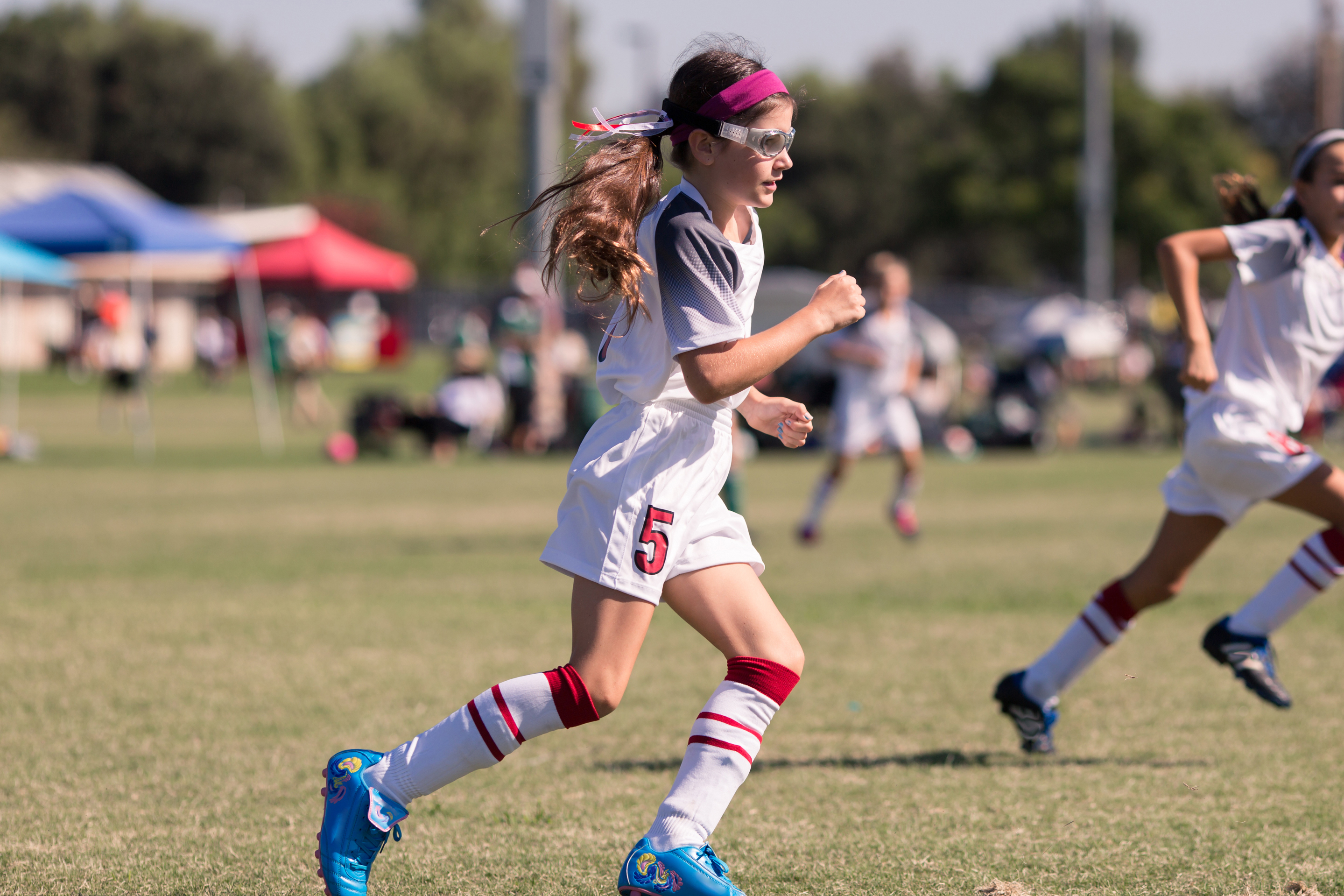
Sports Eye Protection for Kids
September means cleats on the turf, whistles on the field, and gyms filling up with practice drills. As kids gear up for soccer, football, field hockey, and volleyball, most parents focus on the basics: shin guards, mouthguards, proper footwear. One piece of gear that often gets overlooked entirely? Eye protection.
Every year, thousands of children end up in emergency rooms with sports-related eye injuries — and the vast majority were completely preventable.
The Risk Is Bigger Than Most Parents Realize
Basketball, baseball, and racquet sports top the list for youth eye injuries, but soccer, field hockey, and lacrosse carry real risk too. A stray elbow, a fast-moving ball, a stick swung a little too high, or simple contact with another player can cause anything from a minor corneal scratch to permanent vision loss — and most of these injuries are avoidable with the right eyewear.
Why Kids Are Especially Vulnerable
Children's eyes are still developing, and a serious injury at a young age can mean permanently reduced vision in one eye. Kids also have less spatial awareness than adults, may react more slowly to fast-moving objects, and are less likely to instinctively protect their face during a collision.
Regular glasses don't help here — standard lenses and frames can shatter on impact, making an injury worse rather than preventing one.
What Proper Eye Protection Looks Like
· Polycarbonate or Trivex lenses: Far more impact-resistant than regular plastic or glass, and the standard recommendation from eye care professionals.
· Sport-specific goggles or masks: Basketball goggles differ from field hockey masks, so the right fit for the right sport matters.
· ASTM-certified gear: Look for eyewear tested and certified for sports impact protection.
· Proper fit: Fit should be checked at the start of the season. Loose-fitting eyewear can shift during play and fail at the moment of impact.
For kids who already wear prescription glasses, ask your eye doctor about prescription sports goggles rather than relying on everyday frames during games and practice.
Building the Habit Early
Eye protection isn't as normalized in youth sports as helmets or mouthguards, even though the risk is just as real. Coaches and leagues can help by making it part of the standard gear check. Parents can help by treating it as non-negotiable equipment, not an optional extra. The earlier kids get used to wearing it, the more natural — and less of a nuisance — it becomes.
A Simple Preseason Checklist
1. Ask your child's coach or league whether eye protection is required or recommended for their sport.
2. Have an optician check that existing sports goggles still fit, especially if your child has grown since last season.
3. Replace any scratched, cracked, or worn-out protective eyewear.
4. Pack eye protection in the gear bag alongside the rest of the essentials.
5. While you're at it, schedule a back-to-school vision exam — a quick check now can catch changes in your child's prescription before they're squinting at the ball or the board.
The Bottom Line
Fall sports bring energy, teamwork, and a lot of fun — and a little preparation now can keep an eye injury from ever cutting a season short. Proper eye protection is the same kind of common-sense precaution as a helmet or a mouthguard, and it deserves the same priority.
We examine children ages 4 and up and are happy to talk through sports goggle options, prescription or not. Visit our office in West Boylston, Massachusetts, or call 508-854-0595 to book an appointment.
This article is for general informational purposes and isn't a substitute for advice from an eye care professional. If your child experiences an eye injury during play, seek immediate medical attention.


Interested in our
Services?
Request appointment with this form to schedule a time with our professional staff!
- Monday10:00 AM - 1:00 PM
2:00 PM - 5:30 PM - Tuesday9:00 AM - 05:00 PM
- Wednesday9:00 AM - 05:00 PM
- Thursday9:00 AM - 05:30 PM
- Friday9:00 AM - 1:00 PM
By Appointment Only - SaturdayClosed
- SundayClosed
Powered by: